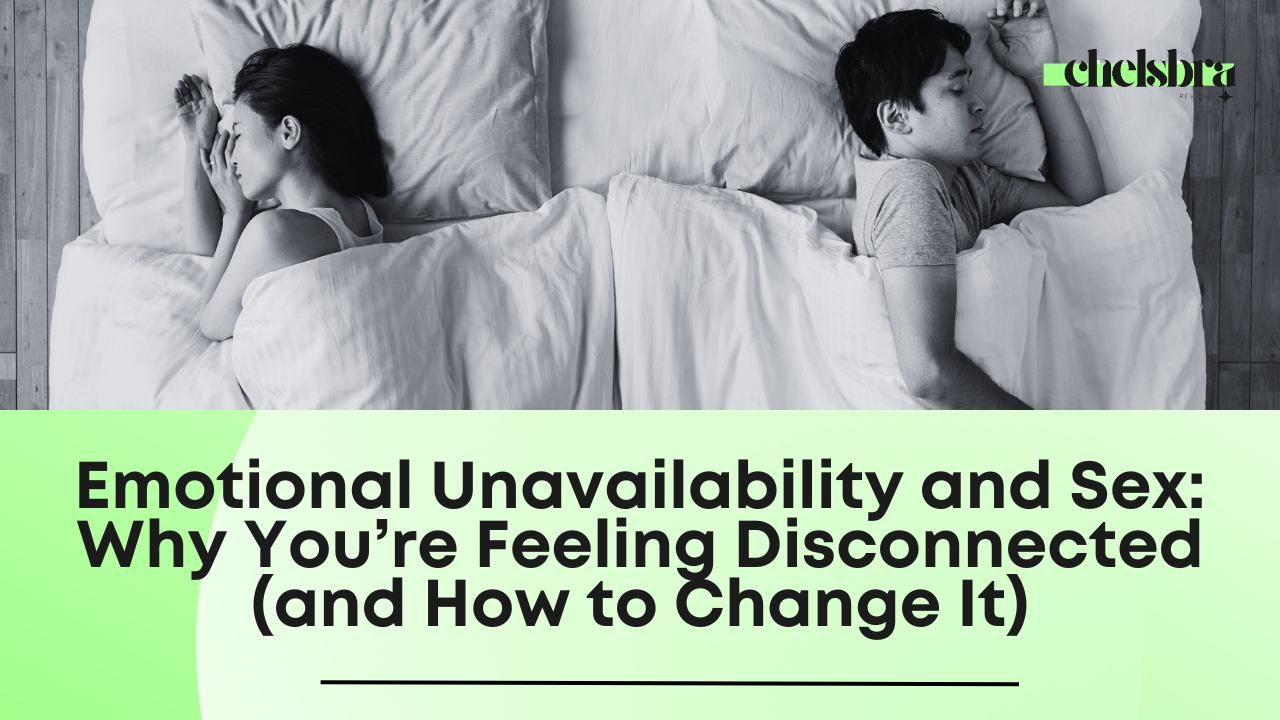
Have you ever found yourself wondering:
“Why won’t they just open up?”
“Why does it feel like I’m the only one trying?”
“Is it me… or are they just emotionally unavailable?”
If you’ve ever sat across from someone you love — poured your heart out, and felt like your words bounced off a wall?— you know the ache of being with someone who is emotionally unavailable.
The thing is: emotional unavailability isn’t just a relationship buzzword. It’s a real dynamic that can quietly sabotage emotional connection, deepen resentment, and even make physical intimacy feel disconnected or robotic.
Let’s unpack exactly what emotional unavailability is, where it comes from, how it shows up (in you or your partner), how it impacts sex and intimacy — and what you can actually do about it.

What Does It Mean to Be Emotionally Unavailable?
To understand emotional unavailability, we first need to understand emotional availability.
An emotionally available person can:
- Feel their emotions fully — not just the easy ones.
- Share those feelings vulnerably with someone they trust.
- Risk disappointment for the sake of true connection.
- Express needs clearly without shame.
- Receive love, support, and care without deflecting or minimizing.
- Dream big and share those dreams with others.
Notice: none of these require perfection. Emotional availability is about openness — not fearlessness.
And here’s the thing:
Everyone is born emotionally available.
Think about toddlers:
They scream when they’re sad.
They giggle when they’re joyful.
They say “I want that!” without filtering or shame.
They dream, play, love, and cry without walls.
Emotional unavailability is learned — it’s protection, not personality.

What Causes Someone to Become Emotionally Unavailable?
No one wakes up one day and decides, “You know what sounds good? Being numb!”
Emotional unavailability usually traces back to early wounds, like:
- Having feelings ignored, minimized, or punished growing up.
- Not having safe adults who could validate emotions.
- Experiencing repeated disappointment when expressing needs.
- Being taught (directly or indirectly) that vulnerability equals weakness.
Imagine it like this:
If your emotions were a waterfall and no one ever taught you how to swim — shutting off the water feels safer than drowning.
Over time, the same emotional walls that once protected you become prisons that keep love and connection out.
Is Being Emotionally Unavailable a Problem?
If you’re wondering, “Wait… am I emotionally unavailable?” — that’s a beautiful first step.
The coping tools that once protected you as a child can cause major issues in adulthood:
- Difficulty expressing what hurts, leaving needs unmet.
- Feeling distant even in committed relationships.
- Feeling unseen, lonely, or resentful — even when you’re “fine.”
- Struggling with real intimacy, emotionally and sexually.
Unchecked, emotional unavailability can trap you (or your partner) in surface-level relationships where true closeness — and deeply satisfying sex — feels impossible.
But here’s the good news:
Emotional availability is a skill you can rebuild.

Signs You (or Your Partner) May Be Emotionally Unavailable
Here are some classic signs of emotional unavailability:
In Yourself:
- You say “I’m fine” even when you’re hurting.
- You avoid talking about feelings, especially the messy ones.
- You keep your guard up, fearing vulnerability will lead to disappointment.
- You struggle to express what you really need.
- You dream small to avoid getting your hopes up.
In a Partner:
- They dodge emotional conversations or brush them off.
- They deflect compliments or affection (“You don’t have to say that”).
- They lash out seemingly “out of nowhere” when vulnerable topics arise.
- They over-give but struggle to receive support, love, or nurturing.
- They stay physically close but emotionally distant.
Important:
Everyone has moments of emotional unavailability — especially in early dating, or when trust hasn’t been established. But if emotional distance is the norm even after months or years, it’s worth paying attention.

How Emotional Unavailability Impacts Sex and Intimacy
Here’s where it hits harder than most people realize:
Emotional unavailability doesn’t just block heartfelt conversations — it also blocks fulfilling sex.
When emotional walls are up:
- Physical touch feels mechanical, not magical.
- Sex becomes about performance, not connection.
- Vulnerable desires, fantasies, and playfulness stay locked away.
- You crave emotional afterglow, but instead feel alone even during or after intimacy.
… Deep, passionate sex isn’t just about technique — it’s about emotional safety.
Without that emotional bridge, no amount of “trying harder” in bed fixes the underlying disconnection.
How to Start Connecting Emotionally (Even If It Feels Scary)
If you or your partner struggle with emotional unavailability, here’s how to start bridging the gap:
1. Lead with Vulnerability.
You can’t force someone to open up, but you can go first. Share something real, even if it feels small.
(Example: “I’m feeling a little nervous sharing this with you, but I want to anyway…” )
2. Create Safe Spaces.
Shift from interrogations (“Why don’t you tell me how you feel?”) to invitations (“When you’re ready, I’d love to hear what’s on your mind.”)
3. Practice Receiving.
If you’re emotionally unavailable yourself, notice where you deflect compliments, help, or love — and practice simply saying thank you without diminishing it.
4. Name Your Needs.
Practice saying what you actually want — emotionally and physically — without apology.
5. Be Patient (But Honest).
Building emotional safety is a process, not a one-and-done conversation. But if someone persistently avoids vulnerability despite your efforts, you have to decide whether that dynamic is sustainable for you.
Final Takeaways
- Emotional unavailability is protection — not a personality flaw.
- It can be healed, but only with conscious effort and willingness.
- Deep emotional connection is the secret ingredient to satisfying, soul-stirring sex.
- Real intimacy starts with courageous vulnerability.
If you’re longing for deeper connection — emotionally and physically — you don’t have to settle for surface-level love.
You have the power to create the kind of relationship that feels safe, seen, sexy, and soulfully connected.
Ready to break the cycle of emotional distance for good? Download my free guide: Healing Emotional Intimacy and start creating a love that feels safe, sexy, and real. ❤️ Get the Free Guide
Leave a Reply